
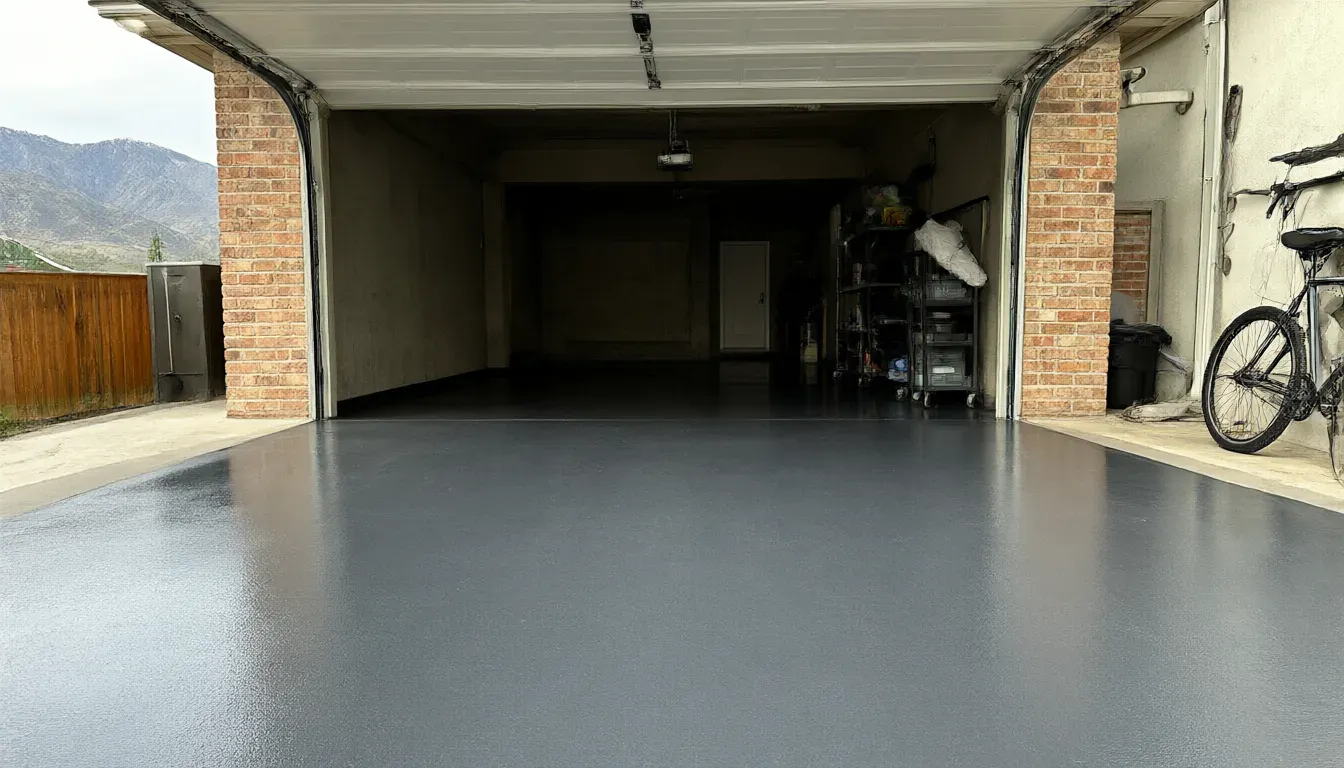
Salt Lake City Superior Epoxy Flooring | Garage Floor Epoxy, Flake Floors, Polished Concrete & Repair for Homes and Businesses
Salt Lake City Superior Epoxy Flooring has installed epoxy flooring, garage floor coatings and polished concrete in Salt Lake City, UT since Jared Nielsen started the company in 2006. Our crews have coated 4,600+ floors, from full-broadcast vinyl flake, metallic epoxy and basement floors to one-day polyaspartic garages and urethane cement in commercial kitchens. Every slab is diamond ground to an ICRI CSP 2-3 profile with HEPA dust extraction, never acid etched. A flake system builds about 25 mils of 100% solids epoxy and polyaspartic, roughly ten times a water-based box-store kit.
Already have a coating that's peeling, yellowing or lifting in tire-shaped patches? We repair and recoat failed floors by grinding the old film off first, and we moisture test basements and slabs under ASTM F1869 or F2170 at no charge. We're licensed through the Utah Division of Professional Licensing (DOPL) and insured, and residential flake and polyaspartic floors carry a 15-year written warranty against peeling, delamination and hot-tire pickup. Most installs are booked 7 to 14 days out.
Get a FREE Estimate
Or call (385) 622-8922
Why Valley Homeowners Pick Us as Their Epoxy Floor Contractors
Since 2006, Licensed Through Utah DOPL and Insured
Jared Nielsen still walks most estimates, and 4,600+ valley floors have come off our trailers.
Itemized Local Pricing, No Franchise Royalty Built In
A two-car flake garage runs $2,500 to $3,600, with prep and crack repair on the quote, not added later.
Free Moisture Testing, Crack Repair and Stem Walls
ASTM F1869 or F2170 tests, crack filling and stem walls up to 12 inches are in the price.
One-Day Garage Floors, Booked 7 to 14 Days Out
Polyaspartic lets you park in 24 hours, and each crew holds 1 rush slot a week for closings.
25 Mils of 100% Solids Epoxy, Not a Water-Based Kit
Full-broadcast flake under a UV-stable polyaspartic topcoat, about ten times a box-store kit.
Residential Epoxy Flooring Installation in Salt Lake City
Most of our work is garages and basements in valley homes. Here's what we put down, with the numbers that matter for each one.
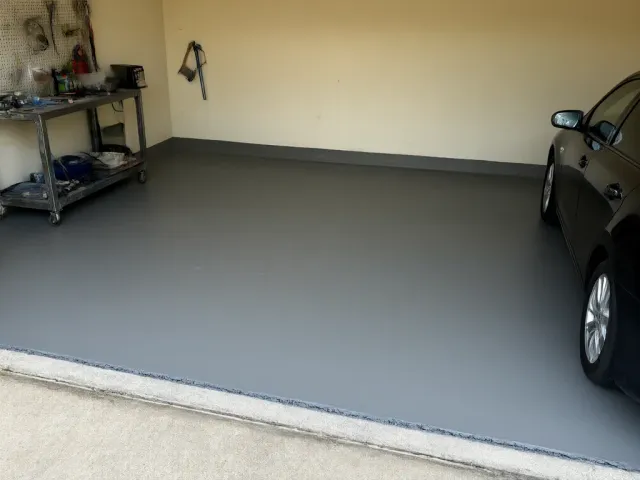
Epoxy Garage Floor Coating
The floor most people mean when they call. We grind to CSP 2-3, fill the cracks, coat stem walls up to 12 inches and finish with a polyaspartic topcoat that shrugs off brine. A two-car garage of about 450 sq ft runs $2,500 to $3,600 as a flake system.
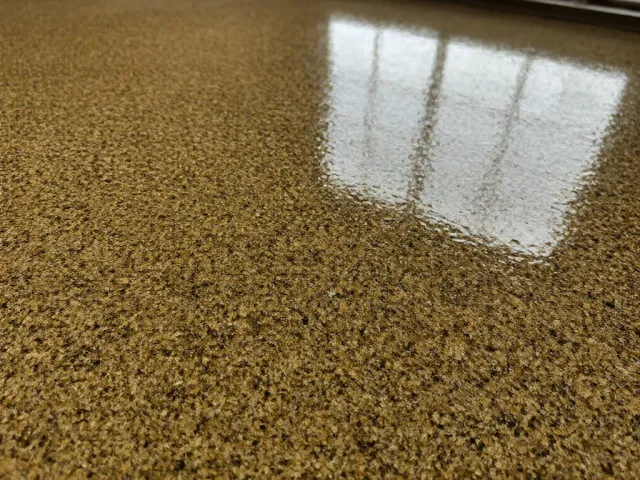
Flake Epoxy Floors
We throw 1/4-inch vinyl flake into a 100% solids base coat until it won't take any more, then scrape, vacuum and seal it. The finished system is about 25 mils thick, hides dust and gives tires grip on a wet January floor. We bring chip samples to the estimate so you see the blend on your own slab.
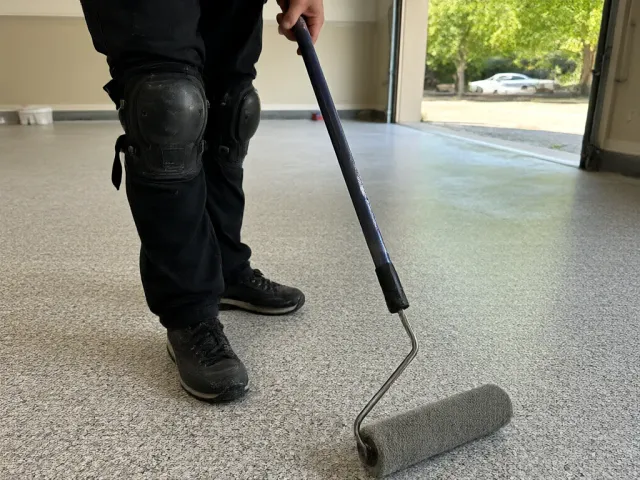
Polyaspartic and Polyurea Floor Coatings
A polyurea base under a polyaspartic topcoat lets us finish a garage in 1 day. You walk on it in 6 hours and park in 24, or 48 when the slab is under 50°F. It's aliphatic, so it won't amber where the afternoon sun hits the apron.
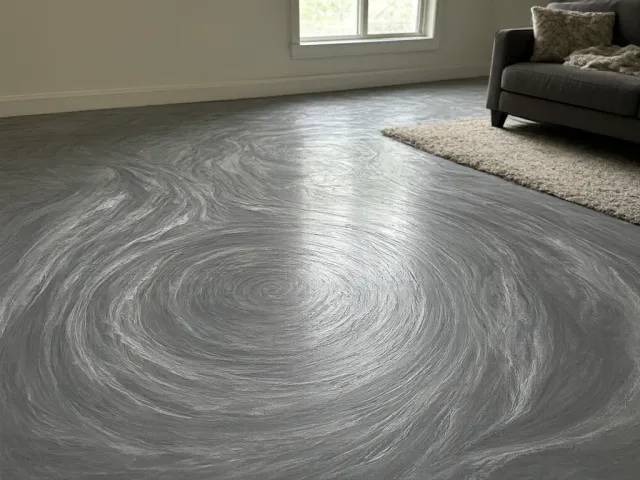
Metallic Epoxy Floors
Metallic pigment epoxy poured at about 30 mils and worked by hand, so no two floors move the same way. It's a 3-day install that belongs indoors: basement family rooms, home bars and studios. Expect $9 to $14 per sq ft depending on colors and design.
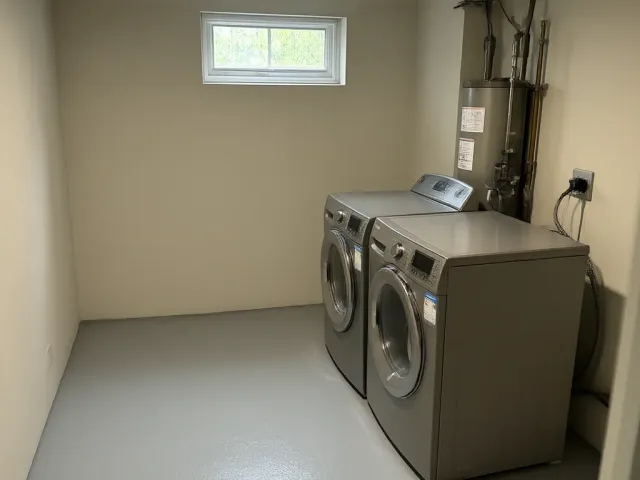
Basement Floor Epoxy
Valley basements sit below grade, so every one gets a free ASTM F1869 or F2170 moisture test before we quote the color. Over 3 lbs or 80% RH, a moisture-mitigating primer goes down first. A basement of about 800 sq ft runs $4,000 to $6,800.
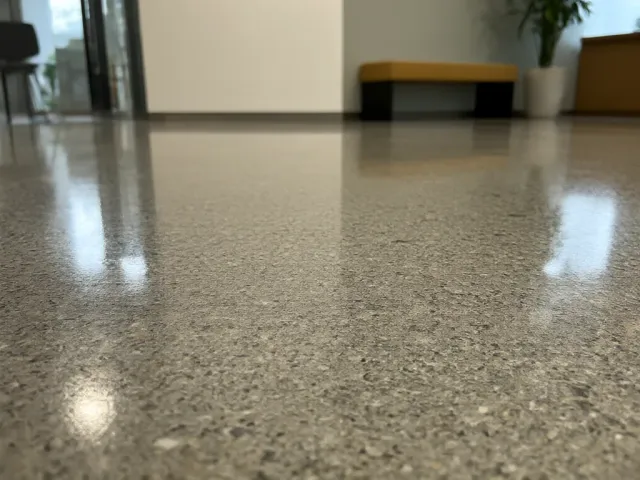
Polished Concrete Floors
No coating at all. We grind with metal-bond diamonds, harden the slab with lithium silicate densifier and polish with resin diamonds to 800 grit, or 1,500 to 3,000 for high gloss. It runs $3.50 to $8 per sq ft and suits basement living space, shops and modern builds with exposed slabs.
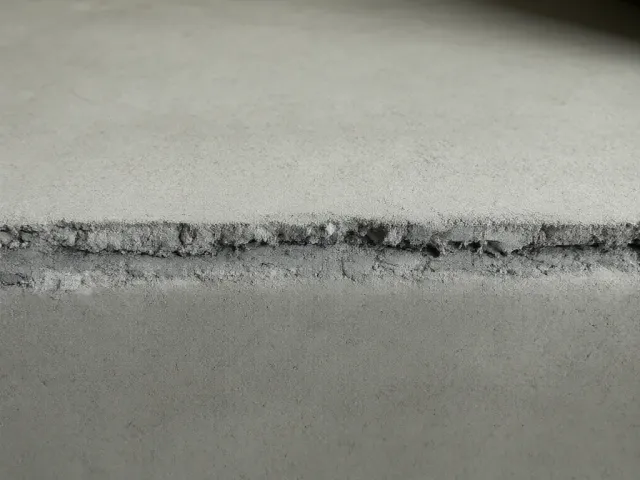
Solid-Color Epoxy Garage and Shop Floors
Two coats of pigmented 100% solids epoxy under a polyaspartic or urethane topcoat. It's the plainest look and the easiest to sweep, at $4 to $6 per sq ft. Ask for aluminum oxide grit in the topcoat if the floor gets wet.
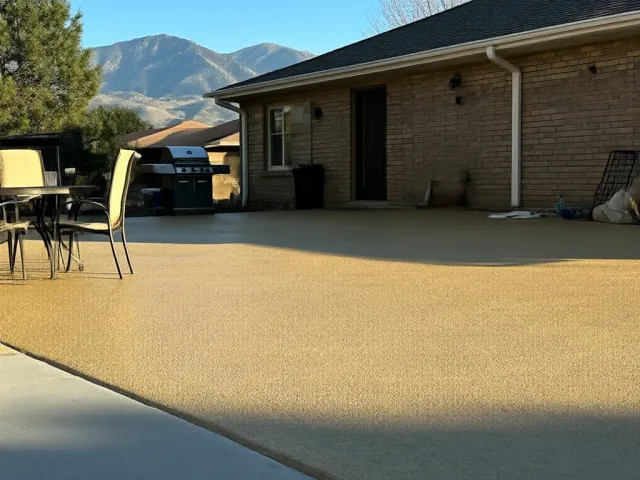
Patio and Pool Deck Coatings
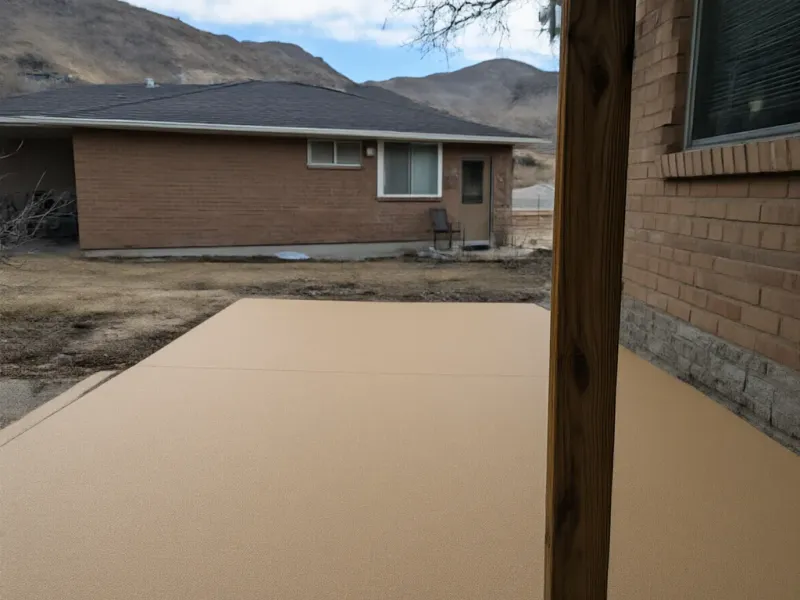
Outdoor slabs get a textured polyaspartic system with aluminum oxide grit or flake, never plain epoxy that ambers in sun. It resurfaces a stained or tired patio for $6 to $9.50 per sq ft with a 5-year warranty. A heaving slab needs a concrete contractor first, and we'll tell you so.
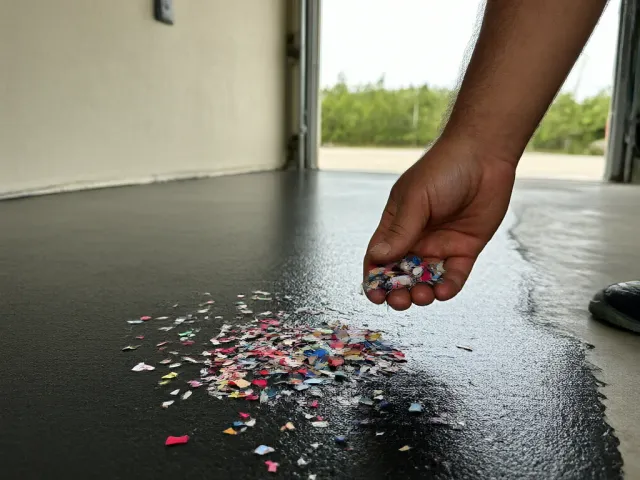
Detached Shop and RV Garage Floors
Big shops get the same CSP 2-3 grind as a garage, with high-build epoxy where jacks, creepers and trailer tongues land. On larger floors we often spec the two-coat, 20-mil system at $3.50 to $7 per sq ft. Tell us what you park and what you spill.
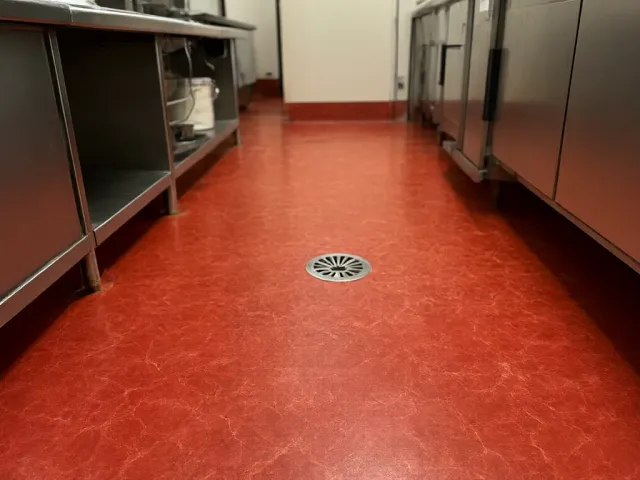
Laundry Room, Mudroom and Home Gym Floors
Small rooms get the same prep and products as a garage, priced per job instead of per square foot. A mudroom off the garage takes the same brine and boots as the garage itself. Most of these are 2-day installs.
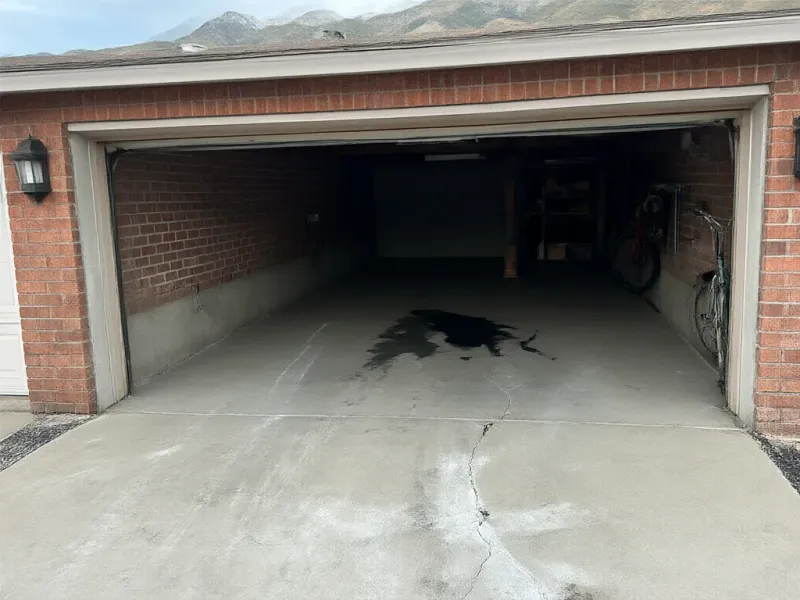
Before and After
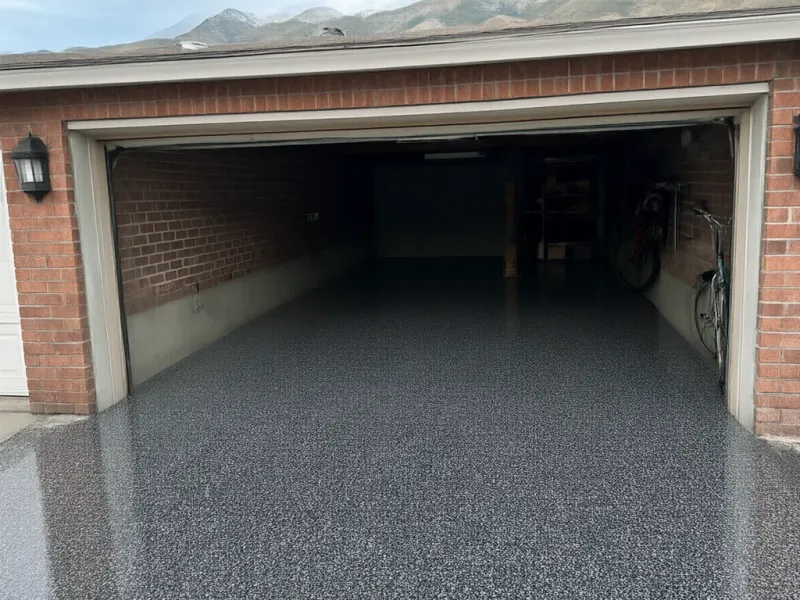
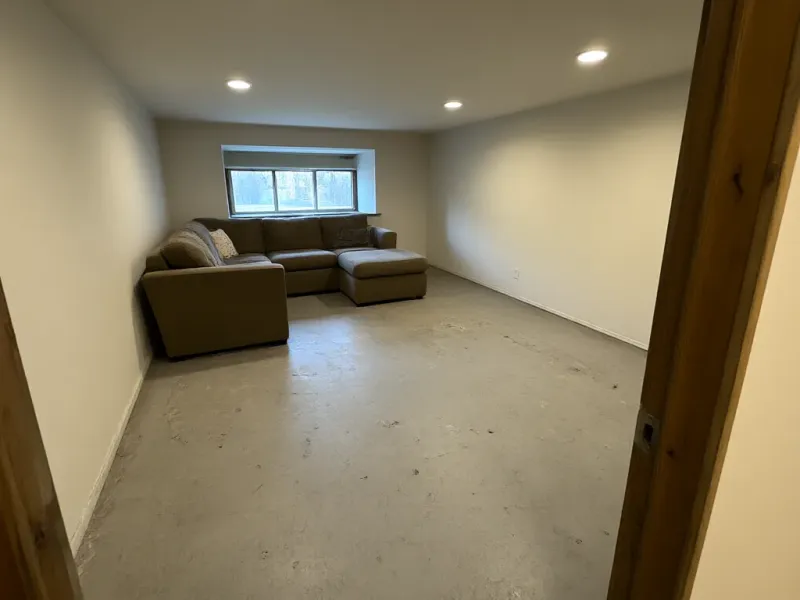
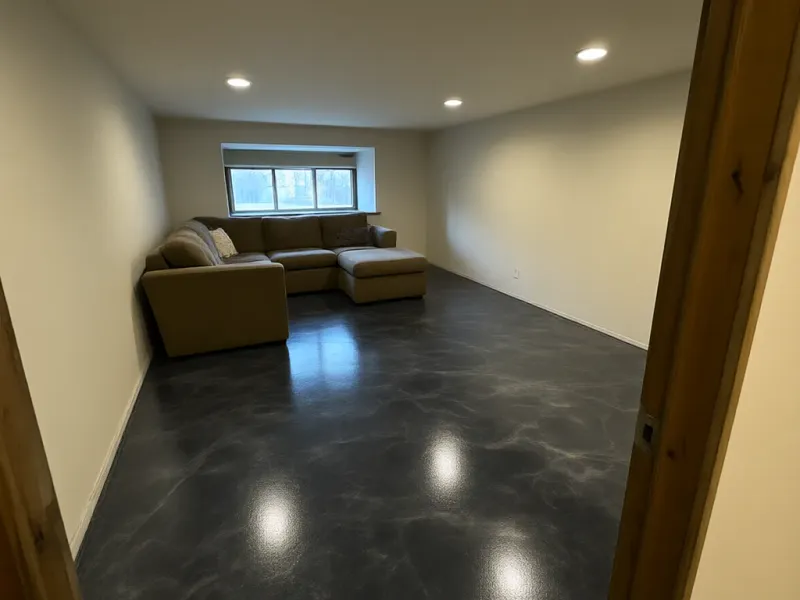
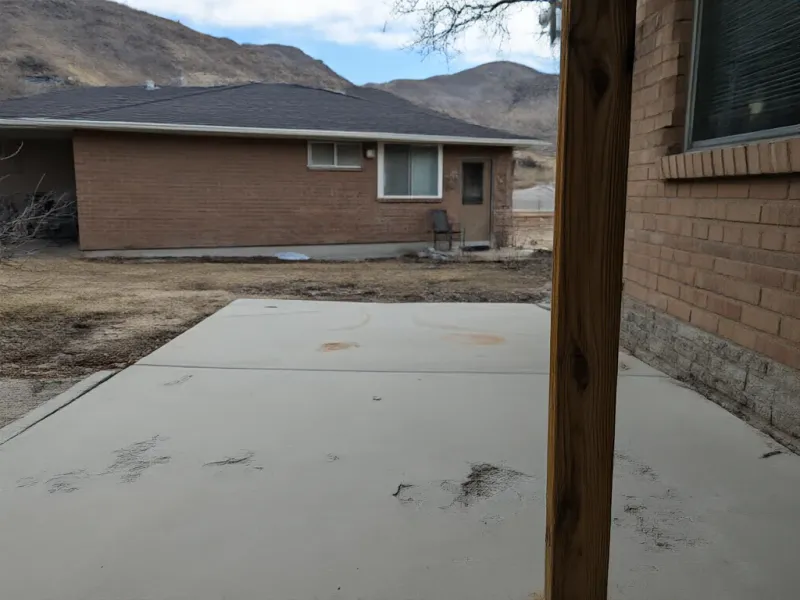
Commercial Epoxy Flooring Contractors for Valley Businesses
Our commercial crew works nights and weekends when a business can't close. Here's how the work splits by building type.
Restaurants and Commercial Kitchens
Urethane cement at 1/4 to 3/8 inch with an integral 4 or 6 inch cove base. It takes hot-water washdown and the thermal shock by the walk-in freezer that cracks standard epoxy. Most kitchens run $10 to $16 per sq ft over 2 to 3 nights or a weekend.
Warehouses and Manufacturing
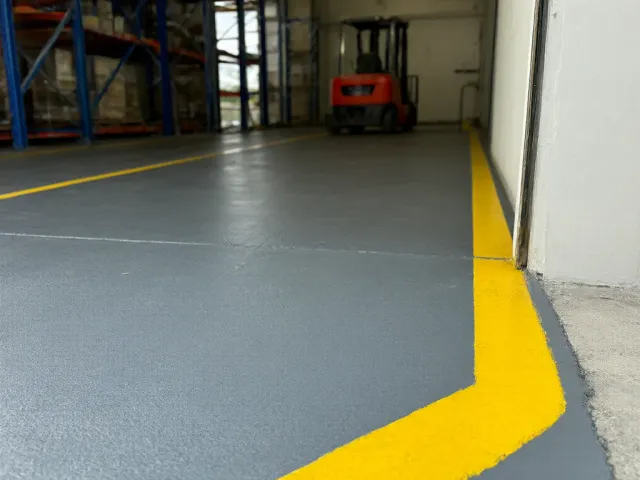
High-build epoxy at about 20 mils over two coats, with novolac epoxy where acids or solvents sit. Forklift lanes and walkways get striping at $1.25 to $2 per linear ft. We grind in sections so shipping keeps moving.
Auto Shops and Dealership Service Bays
Lifts, jacks, hot fluids and winter brine all land on the same floor. We use quartz broadcast or high-build epoxy with grit, coved where washdown water runs. Quartz service bays usually land at $8 to $12 per sq ft.
Clinics, Dental and Veterinary Offices
Quartz broadcast epoxy, about 1/8 inch thick, gives a textured floor that mops fast and has no grout lines to hold liquids. Coved base keeps mop water off the drywall at $12 to $20 per linear ft.
Retail Stores, Showrooms and Offices
Polished concrete is the low-maintenance pick for retail, with no coating to wear through and no wax to strip, at $3.50 to $8 per sq ft. Showrooms that want color go metallic epoxy at $9 to $14 per sq ft.
Epoxy Floor Repair and Specialty Prep Services
Epoxy Floor Repair and Recoating
Peeling kits, yellowed epoxy and hot-tire patches get ground off to bare concrete, then recoated with a full system. A strip and recoat runs $6.50 to $9.50 per sq ft and carries the same 15 years as a new flake floor. Spot repairs run $350 to $900 a visit.
Moisture Vapor Testing and Mitigation
ASTM F1869 calcium chloride domes sit 60 to 72 hours, or ASTM F2170 probes go in at 40% of slab depth. High readings get a moisture-mitigating epoxy primer for $1.50 to $3 per sq ft. Testing is free on every basement and slab-on-grade quote.
Concrete Crack and Spall Repair
Cracks are chased with a diamond blade, filled with rigid epoxy or polyurea and ground flush, and spalls get epoxy mortar. Salt-pitted aprons by the garage door are the most common patch in a city with 127 freezing days a year. On a coating job, it's included.
Safety Striping and Floor Marking
Forklift lanes, pedestrian walkways, hazard zones and parking stalls get epoxy or polyurea line coatings at $1.25 to $2 per linear ft. We lay the lines out with your shop manager before the first one goes down.
What Makes Us the Best Epoxy Flooring Contractor in Salt Lake City
A coating is only as good as the slab under it and the crew putting it down. We've spent 20 years learning how valley slabs behave: brine on garage aprons, vapor in basements, cold slabs during inversion weeks.
Here's how we work, what we put down, and why. Every spec on this page shows up on your written quote too.
Our Epoxy Floor Installation Process
Free estimate and slab check
Jared or our estimator measures, finds cracks, old coatings and salt damage, and reads the slab temperature. You get an itemized quote by email the same day.
Moisture test where it matters
Basements and slab-on-grade floors get an ASTM F1869 or F2170 test at no charge. The result decides whether the mitigating primer goes in.
Diamond grind and repair
We grind to ICRI CSP 2-3 with HEPA extraction, chase and fill cracks, patch spalls and grind every repair flush.
Coat and broadcast
Base coat, flake or quartz broadcast to rejection, scrape and vacuum, then the topcoat. One-day polyaspartic garages finish the same afternoon.
Walkthrough and cure
We walk the floor with you, hand over care instructions and the written warranty, and tell you the exact hour you can park.
Diamond Grinding to ICRI CSP 2-3, Never Acid Etching
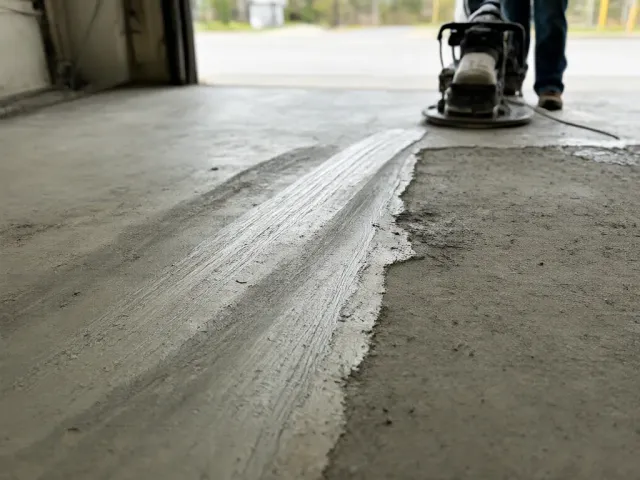
A garage slab is steel-troweled smooth, and smooth gives a coating nothing to hold. ICRI's concrete surface profile chips run from CSP 1, nearly flat, to CSP 10, a heavy scarified surface. Floor coatings like ours want CSP 2-3, about the feel of coarse sandpaper.
Acid etching can't get there reliably. It opens some spots, leaves others glazed and soaks the slab right before you coat it. We grind every floor with walk-behind planetary grinders tied to HEPA dust extractors, which is also how OSHA's silica rule expects concrete grinding to be done.
Ask anyone who quotes your floor what profile they grind to. If you get a shrug, keep looking.
Moisture Vapor Testing Under ASTM F1869 and F2170
Water vapor moves up through concrete all the time. When it moves fast enough, it pushes a coating off from below in blisters. Basements and slabs on grade are where that happens, and the valley is full of both.
We run one of two tests. ASTM F1869 seals a calcium chloride dish under a dome for 60 to 72 hours and weighs what it absorbs. ASTM F2170 sets probes at 40% of slab depth and reads relative humidity after 24 hours.
Our rule is simple. Over 3 lbs per 1,000 sq ft per 24 hours, or over 80% RH, and a moisture-mitigating epoxy primer goes down first. The test is free, and skipping it is the most expensive shortcut in this trade.
100% Solids Epoxy vs Water-Based Kits
A mil is a thousandth of an inch, and it's the number that tells you what you're buying. A lot of a water-based kit is water that evaporates, leaving roughly 2 to 3 mils on the floor.
100% solids epoxy has nothing to flash off, so what we roll on is what stays. With full-broadcast flake and a polyaspartic topcoat, our garage systems build about 25 mils. Think of the kit as a coat of paint and the system as a floor.
Polyaspartic Topcoats and High-Altitude Sun
Standard epoxy is aromatic, and aromatic resins amber under UV. At 4,327 feet, with the garage door open on summer afternoons, an epoxy-topped apron can turn yellow while the back of the garage stays gray.
Polyaspartic is aliphatic, so it holds its color in sun. It also cures fast enough for 1-day installs and goes down on a slab as cold as 40°F. That's why our residential systems put epoxy or polyurea underneath and polyaspartic on top.
Why Cheap Coatings Peel in Tire Shapes
Drive home on I-15 in July and your tires come off the freeway hot. Park on a thin coating and the heat and plasticizers in the rubber soften it until it sticks to the tire better than to the slab. You back out the next morning and part of the floor leaves with you.
Hot-tire pickup traces back to two things: no mechanical profile and a film too thin to resist. A CSP 2-3 grind and about 25 mils fix both, and our 15-year residential warranty names hot-tire pickup in writing.
Road Salt, Brine and Freeze-Thaw in Valley Garages
Salt Lake City averages 60 inches of snow a season and 127 days at or below freezing. Every storm sends brine into the garage on your wheel wells, where it melts, soaks into bare concrete and refreezes. That cycle is what pits and flakes uncoated aprons.
A coated floor stops the brine at the surface. You'll still see white crust by the door in January, and that's dried salt, not a failed coating. Squeegee it out, rinse, and mop with a pH-neutral cleaner.
Full-Broadcast Flake, Thrown to Rejection
Flake can be a light sprinkle or a full broadcast. We throw 1/4-inch vinyl flake into the wet base coat until it won't take any more, then scrape the loose chips and vacuum before the topcoat goes on.
Full coverage does three jobs. It adds film thickness, it hides dust and tire marks between cleanings, and its texture gives shoes and tires grip on a floor wet with snowmelt. A partial sprinkle does none of those.
Cold Slabs, Inversions and Cure Times
Epoxy needs the slab at 55°F or warmer and rising, and 5°F above the dew point. An unheated garage during an inversion week can sit under 40°F for days, and epoxy rolled onto that stays tacky.
So November through March, unheated garages get polyaspartic, which cures on a slab as cold as 40°F. Every crew carries an infrared thermometer and checks the dew point before anything gets mixed.
Cracks, Control Joints and Spalls
Every slab cracks somewhere. Concrete shrinks as it cures, and the old lake sediments under the valley floor can shift. We chase each crack with a diamond blade, fill it with rigid epoxy or polyurea and grind it flush, and spalls get epoxy mortar.
Control joints are your call. We can fill them with semi-rigid polyurea and coat over, or leave them open. Filled looks cleaner but can show a hairline if the slab moves, so we show you both before you pick.
Warranty Terms, Written Down
Residential flake and polyaspartic floors carry 15 years against peeling, delamination and hot-tire pickup, and the warranty transfers once if you sell the house. Solid-color and metallic epoxy carry 5 years. Basements with the mitigating primer carry 10.
What isn't covered is written down too: gouges from dropped tools, stains from chemicals left sitting, new cracks from slab movement, and moisture failures where a test came back high and the primer was declined.
Epoxy Flooring Contractors Serving the Salt Lake Valley
Salt Lake City Superior Epoxy Flooring serves surrounding areas to Salt Lake City, UT, including West Valley City, Sandy, South Jordan, West Jordan, Murray, Draper, Millcreek, Holladay, Taylorsville, Midvale, Cottonwood Heights, South Salt Lake, Riverton, Herriman, Bluffdale, Kearns and Magna.
Inside the city, the job changes by neighbourhood. Sugar House, Yalecrest, 9th and 9th and the Avenues lean older, with basements that get a moisture test before anything else. The East Bench, Federal Heights and parts of Rose Park and Glendale have seen more building since the 1970s, which usually means bigger garages and more afternoon sun on the apron.
The whole valley floor is the old bed of Lake Bonneville, with clay and sand sediments under most slabs and shoreline benches up the foothills. Add 60 inches of snow a season, brine on every road and 56 days a year at 90°F or hotter, and a valley floor has to handle cold, salt and sun in the same year.
- Salt Lake City, UT
- West Valley City, UT
- Sandy, UT
- South Jordan, UT
- West Jordan, UT
- Murray, UT
- Draper, UT
- Millcreek, UT
- Holladay, UT
Epoxy Flooring Cost in Salt Lake City
Honest numbers for 2026, installed, anywhere in the Salt Lake Valley. Where you land in each range depends on square footage, cracks, old coatings and what the moisture test says.
| Job | Typical range | What drives the price |
|---|---|---|
| Two-car garage flake system, about 450 sq ft | $2,500 to $3,600 | Epoxy base, full-broadcast flake, polyaspartic top |
| One-day polyaspartic flake system | $6 to $9 per sq ft | Polyurea base, park in 24 hours |
| Solid-color epoxy garage floor | $4 to $6 per sq ft | Two coats 100% solids plus topcoat |
| Metallic epoxy floor | $9 to $14 per sq ft | Moves with color count and design |
| Basement floor epoxy, about 800 sq ft | $4,000 to $6,800 | Add $1,200 to $2,400 if the test calls for mitigating primer |
| Polished concrete | $3.50 to $8 per sq ft | 800 grit standard, higher gloss costs more |
| Commercial quartz broadcast epoxy | $8 to $12 per sq ft | Restrooms, locker rooms, clinics, service bays |
| Urethane cement for kitchens | $10 to $16 per sq ft | Cove base billed at $12 to $20 per linear ft |
| Strip and recoat over a failed coating | $6.50 to $9.50 per sq ft | Includes grinding the old coating off |
Moisture testing, crack and spall repair, and stem walls up to 12 inches are inside every one of those numbers. You get a written, itemized quote by email the same day we see the floor.
Epoxy Flooring Questions We Hear in Salt Lake City
Are you searching for 'epoxy flooring near me'?
If you've been searching for epoxy flooring near me in Salt Lake City, UT, you've found a local crew. Salt Lake City Superior Epoxy Flooring is a locally based epoxy flooring contractor serving Salt Lake City and the Salt Lake Valley since 2006. Call us at (385) 622-8922 or request a free estimate, and we'll call back within 2 business hours, Mon-Fri 7am-6pm.
How long does an epoxy garage floor last?
Long enough that we warranty full-broadcast flake and polyaspartic floors for 15 years against peeling, delamination and hot-tire pickup. Thin kits often fail in the first summer. The difference is the CSP 2-3 grind and about 25 mils of film.
Can you coat a garage floor in the winter?
Yes. We use polyaspartic for unheated garages from November through March because it cures on slabs as cold as 40°F. You'll need to wait 48 hours before parking instead of the usual 24 if the slab is under 50°F.
Is epoxy or polyaspartic better for a garage floor?
We use both materials in separate layers. We apply epoxy or polyurea first for build and bond, then polyaspartic on top for UV stability, brine resistance, and a fast cure. An all-epoxy floor will amber in direct sunlight.
Do I need a moisture test before you coat my basement?
Yes, and we do it for free. Vapor from a below-grade slab is why most basement coatings bubble. If we find over 3 lbs on ASTM F1869 or 80% RH on F2170, we apply a moisture-mitigating primer before the color coat.
Will an epoxy floor fix radon in my basement?
No. A coating isn't a radon mitigation system, and Utah licenses radon mitigation as its own specialty. Test first, mitigate if the number calls for it, and then we'll coat the floor around the system.
Do I have to empty the garage before install day?
Yes. You should clear the garage the night before. If you have an item that cannot move, tell us during the estimate. We can plan around it, but we won't be able to coat the slab underneath.
Are you licensed and insured in Utah?
Yes. We're licensed through the Utah Division of Professional Licensing (DOPL) and carry general liability and workers' compensation. We use our own crews for every job. You won't have strangers grinding or coating your floor.
Get a Free Epoxy Floor Estimate in Salt Lake City
Call (385) 622-8922 or send the form. We call back within 2 business hours, Mon-Fri 7am-6pm, and most installs are booked 7 to 14 days out.