
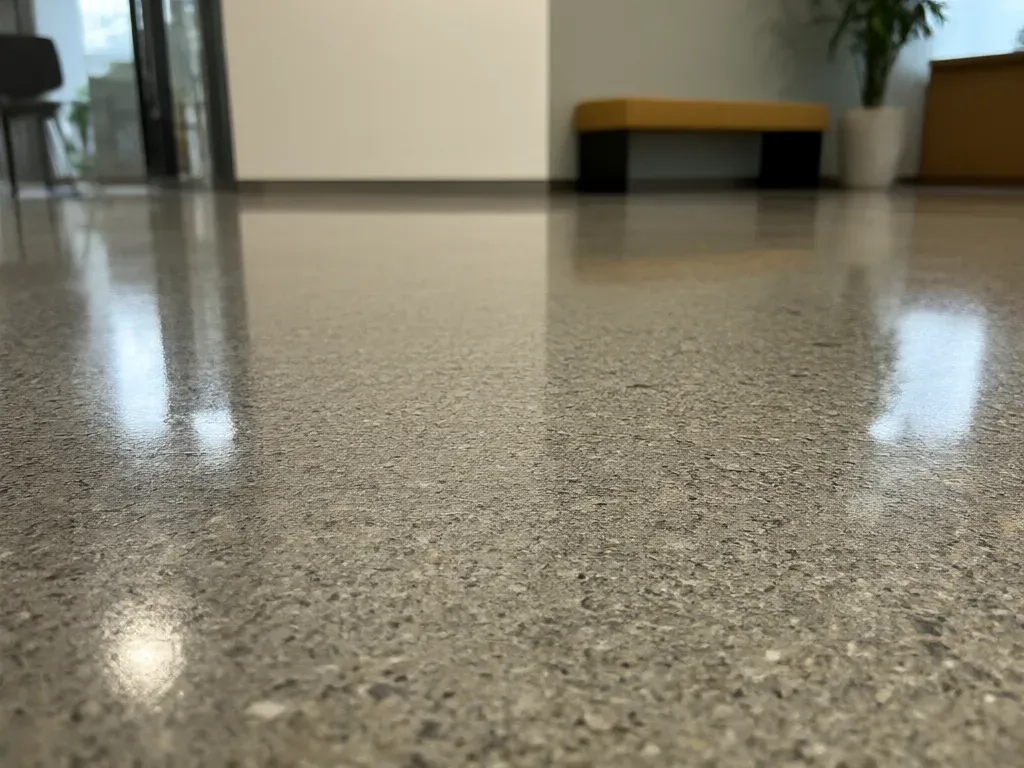
Polished Concrete Floors in Salt Lake City, UT
Salt Lake City Superior Epoxy Flooring offers professional polished concrete floors in Salt Lake City, UT with 20 years of experience grinding slabs for a living. Polished concrete isn't a coating. We grind the slab itself with metal-bond diamonds, harden it with lithium silicate densifier and refine it with resin diamonds until it reflects light.
A standard polish stops at 800 grit, and high gloss goes to 1,500 to 3,000 grit. A penetrating guard on the last pass helps the surface shrug off oil, coffee and wine. Polished concrete floors run $3.50 to $8 per sq ft, with no coating to peel and no wax to strip, and carry a 2-year workmanship warranty.
Get a FREE Estimate
Or call (385) 622-8922
Polished Concrete Finish Options
Two choices shape a polished floor: how deep we grind, which decides how much stone shows, and how far we polish, which decides the shine.
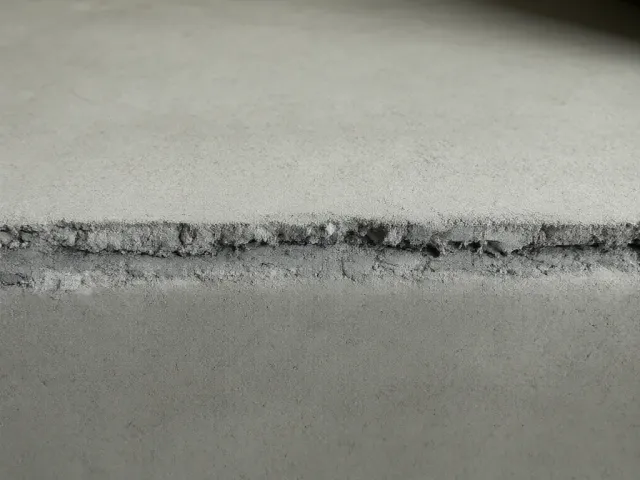
Cream Polished Concrete
We grind just enough to open the surface and keep the cream layer intact, so almost no aggregate shows. It gives the most uniform look and the lowest cost in the range. It needs a fairly flat slab, because a deeper grind on the high spots would expose stone in patches.
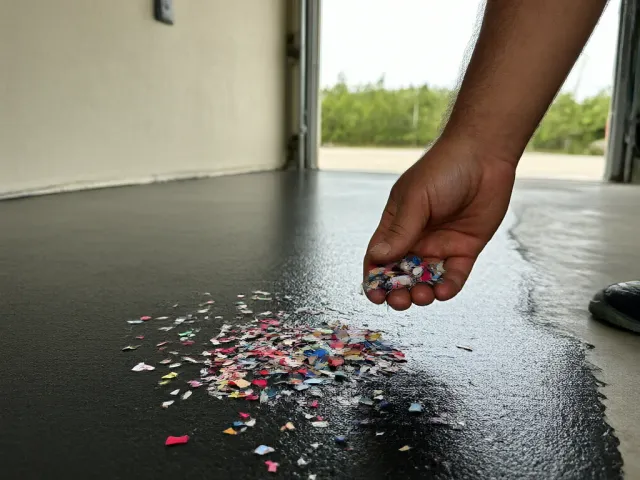
Salt-and-Pepper Polished Concrete
A slightly deeper grind exposes fine sand and small aggregate across the floor. It's the look most people picture in a modern office or retail space. It also hides small blemishes better than a cream finish.
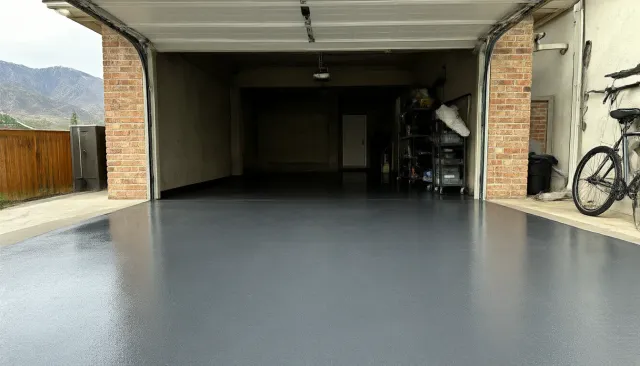
Exposed Aggregate Polished Concrete
We grind deep enough to show the larger stone in the mix. Every slab's aggregate is different, so we grind a test spot before you commit. It takes more passes with metal-bond diamonds and costs more.
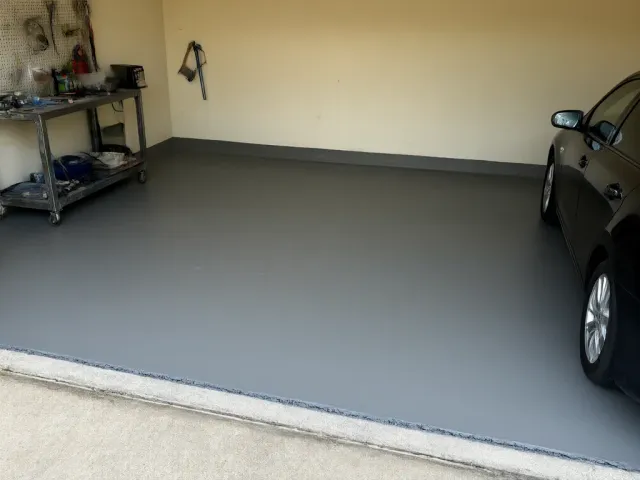
Grind and Seal Concrete
For shops, basements and storage areas where shine isn't the goal, we grind, densify and finish with a penetrating sealer instead of a full polish. It's quicker and sits at the low end of the price range. You get a hard, dust-free slab without a coating on top.
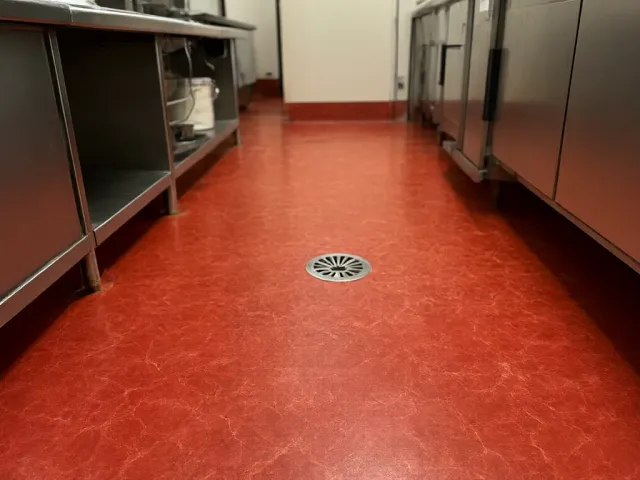
Polished Concrete for Retail, Offices and Shops
Commercial floors get polished to 800 grit or higher, guarded and burnished so a night crew can maintain them with an auto-scrubber. There's no coating to wear through in high-traffic aisles. We work nights and weekends at no surcharge.
Before and After
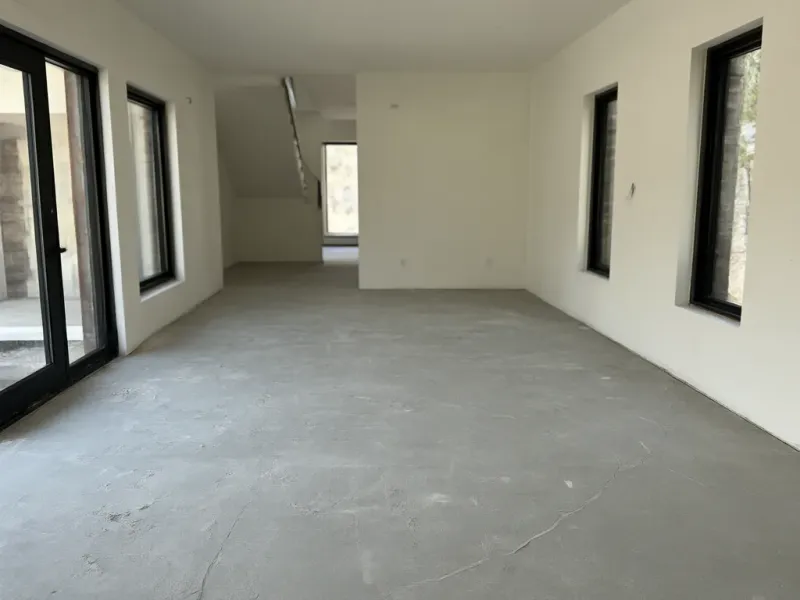
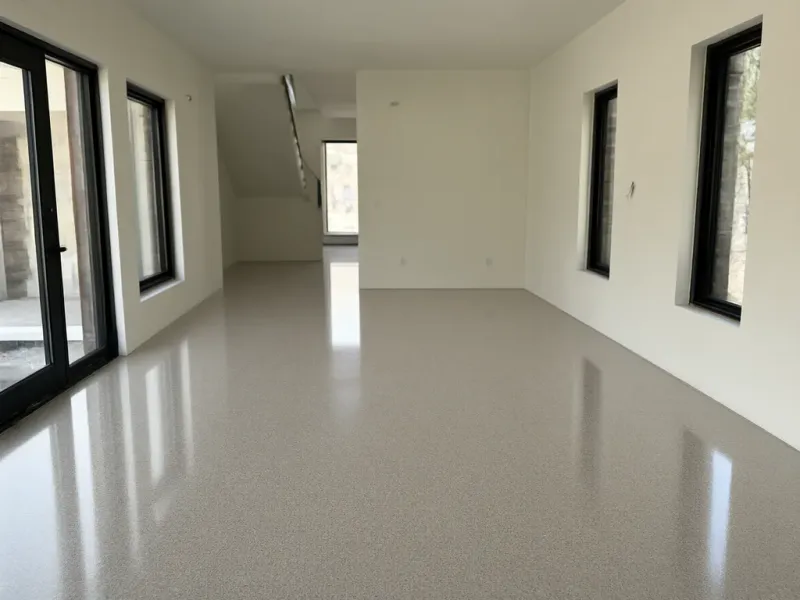
What Polished Concrete Needs From the Slab
Polishing shows you the slab you have. Cracks, old patches, trowel burns and stains from past spills all stay visible, because nothing covers them. Some people love that character. Others are surprised by it, so we grind a test spot and show you before we quote the full floor.
Old adhesive, paint and sealers have to come off completely, or they smear and glaze under the diamonds. Cracks can be filled with a color-matched filler, but the line will still read as a line.
Newer slabs with a clean, hard troweled surface polish best. Older basement slabs can polish well too, but you'll see their history in the finish.
Polished Concrete vs Epoxy Coatings
Polished concrete has nothing on top to peel, chip or lift from hot tires. It lets vapor pass, so a slab that reads high on a moisture test isn't the same risk it would be under a coating. That makes it a good fit for some basements.
Epoxy wins in other places. It hides cracks and stains, it resists brine and chemicals better, and it comes in any color. A polished floor can still take a stain from oil or acid left sitting, even with a guard on it.
Our rule of thumb: polish where the slab is decent and the traffic is people, coat where the slab is rough or the traffic is cars, salt and chemicals. A garage that sees winter brine almost always ends up coated.
Keeping a Polished Floor Shiny
Grit dulls polished concrete, so dust mop often and put walk-off mats at the doors. Clean with a pH-neutral cleaner, never vinegar or bleach, which etch the surface over time.
Commercial floors stay brightest with an auto-scrubber and a regular burnishing schedule. Homes rarely need more than a mop. When a floor in a heavy-traffic area starts to look tired, the fix is a re-guard and burnish, not a full re-polish.
Our Concrete Polishing Process
Test spot and plan
We grind a small test area so you see the aggregate and color your slab will show, then quote the finish you pick.
Metal-bond grinding
Metal-bond diamonds starting at 30 or 40 grit remove coatings, glue and the weak surface, on HEPA extraction.
Densify
Lithium silicate densifier goes on after the metal-bond passes. It reacts inside the concrete and hardens the surface for polishing.
Resin polishing
Resin diamonds take the floor to 800 grit for a standard polish, or 1,500 to 3,000 grit for high gloss.
Guard and burnish
We apply a penetrating guard and a final burnish for stain resistance. You can walk on the floor the same day we finish.
Polished Concrete Floor Questions
Is polished concrete slippery?
A clean, dry polished floor has good traction. Water, dust and spilled oil are what make it slick, so mats at the doors and quick cleanup matter more than the gloss level.
Can you polish a basement floor?
Often. A coating can trap vapor, but polish doesn't. If your slab tests damp, polishing is a lower risk. We have to remove all old glue and paint first, and you'll see the slab's history in the final finish.
Will polishing hide cracks in my slab?
No. We can fill cracks with color-matched filler, but they'll still show as lines. If you want cracks to disappear, choose a flake or solid-color epoxy floor.
How long does polishing take?
It takes about 2 to 3 days for roughly 500 sq ft. You can walk on the floor the same day we finish. There's no cure time before you move furniture back.
Does polished concrete need wax?
No. The shine comes from the polished concrete itself. Maintain it with a dust mop and a pH-neutral cleaner. In heavy-traffic areas, you might need a re-guard and burnish when the surface looks tired.
See a Polished Concrete Test Spot on Your Slab
Call us at (385) 622-8922 or use the quote form. We'll look at the slab, talk finish and gloss, and email an itemized quote the same day.