
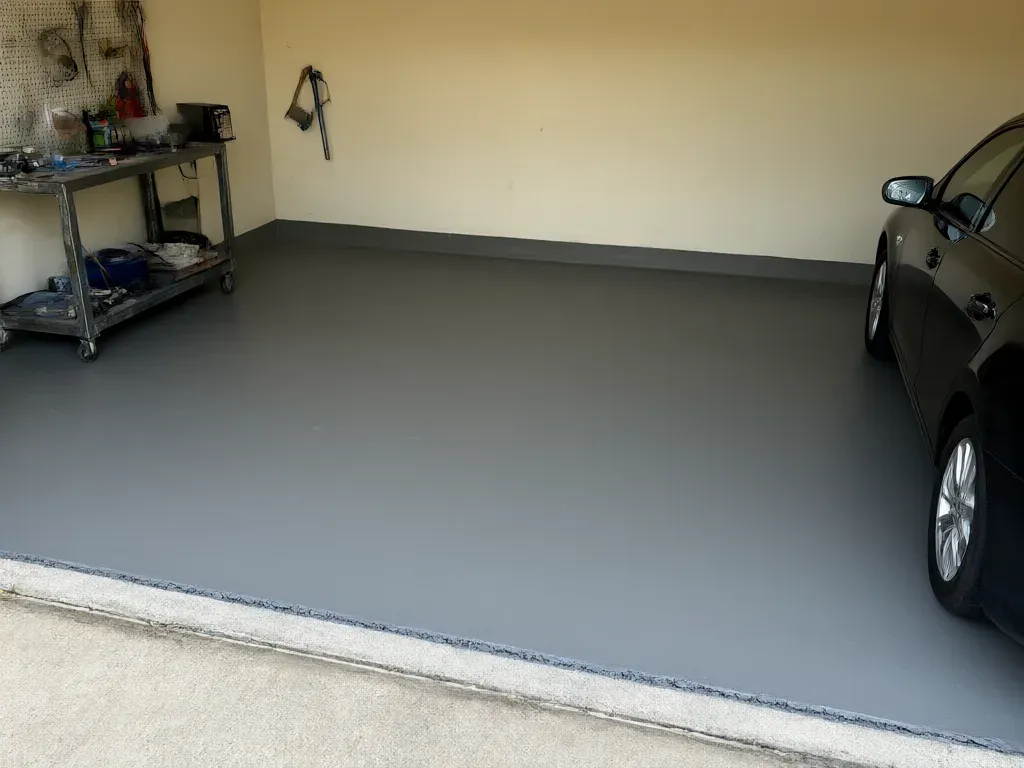
Garage Floor Epoxy Coating in Salt Lake City, UT
Salt Lake City Superior Epoxy Flooring offers professional garage floor epoxy coating in Salt Lake City, UT with 20 years of experience and 4,600+ floors behind us. We coat two-car and three-car garages, detached shops and RV bays with 100% solids epoxy, full-broadcast vinyl flake and a clear polyaspartic topcoat. Every slab is diamond ground to ICRI CSP 2-3 before the first coat, and stem walls up to 12 inches tall are included.
A garage floor takes hot tires, road salt brine, snowmelt and dropped tools, sometimes in the same week. That's why we build about 25 mils of coating instead of the 2 to 3 mils a water-based kit leaves behind. Our epoxy garage floor systems carry a 15-year warranty against peeling, delamination and hot-tire pickup. A two-car garage of about 450 sq ft runs $2,500 to $3,600.
Get a FREE Estimate
Or call (385) 622-8922
Garage Floor Epoxy Coating Options
Five ways we coat a garage. Most valley homeowners end up with the first or second one.
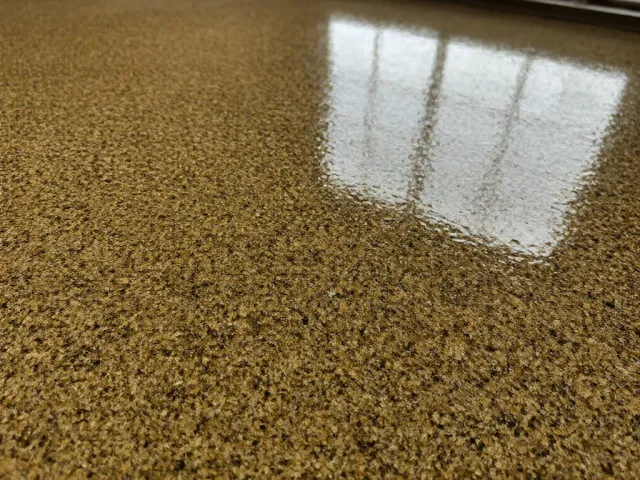
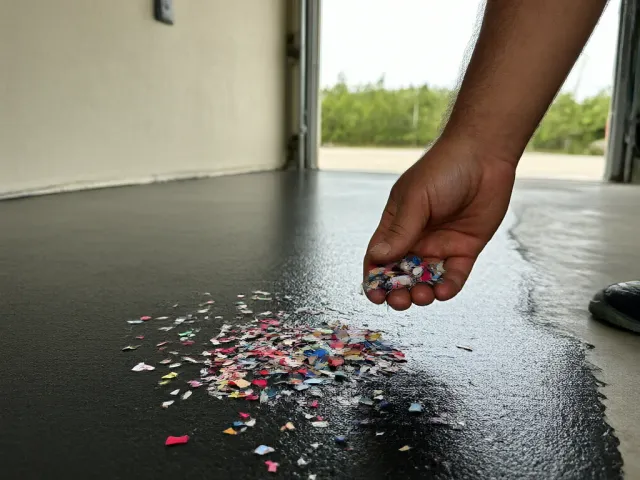
Full-Broadcast Flake Epoxy Garage Floors
A 100% solids epoxy base coat, 1/4-inch vinyl flake thrown until the wet coat won't take more, then a clear polyaspartic topcoat. It's our most common garage floor because it hides dust, adds grip and builds about 25 mils. Plan on 2 days and $5.50 to $8 per sq ft.
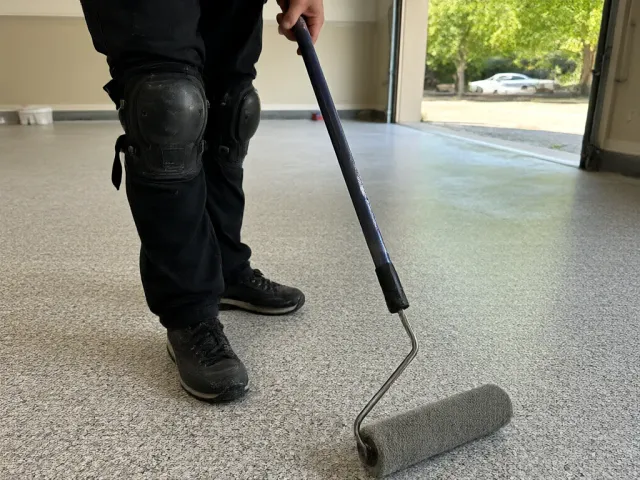
One-Day Polyaspartic Garage Floors
Same flake look on a polyurea base, finished in 1 day. You walk on it in 6 hours and park in 24, or 48 if the slab is under 50°F. It's our default for unheated garages from November through March, at $6 to $9 per sq ft.
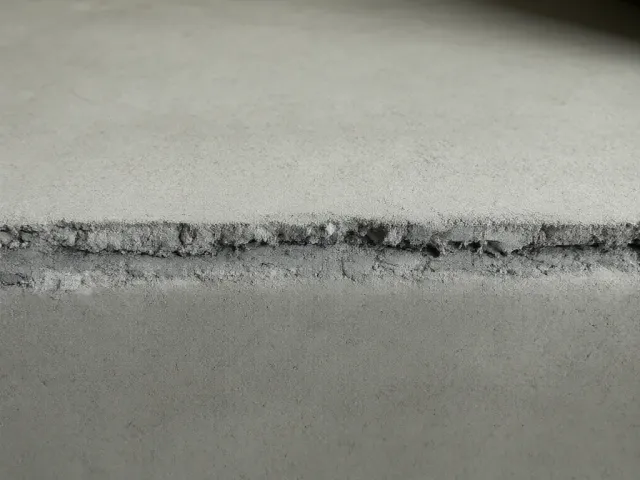
Solid-Color Epoxy Garage Floors
Two coats of pigmented 100% solids epoxy under a polyaspartic or urethane topcoat, usually gray or tan. It looks clean and sweeps easily, but it shows dust and salt sooner than flake. It runs $4 to $6 per sq ft, and we add aluminum oxide grit to the topcoat if you ask.
Garage Stem Wall and Step Coatings
The short concrete wall at the base of your garage walls takes splash from every wet tire. We coat stem walls up to 12 inches tall in the same system at no charge. Steps into the house get the same coating with grit on the treads.
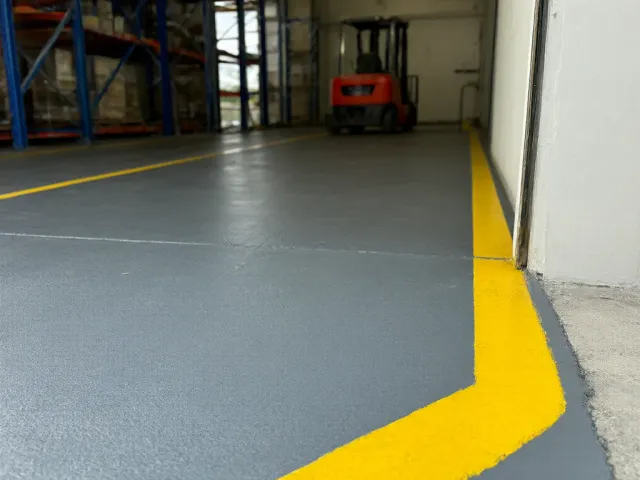
Epoxy Garage Floors for Shops and RV Bays
Detached shops and RV garages see jacks, creepers and trailer tongues, so we lean on high-build epoxy. Two coats at about 10 mils each give about 20 mils for $3.50 to $7 per sq ft. Flake can go on top if you want the look.
Before and After
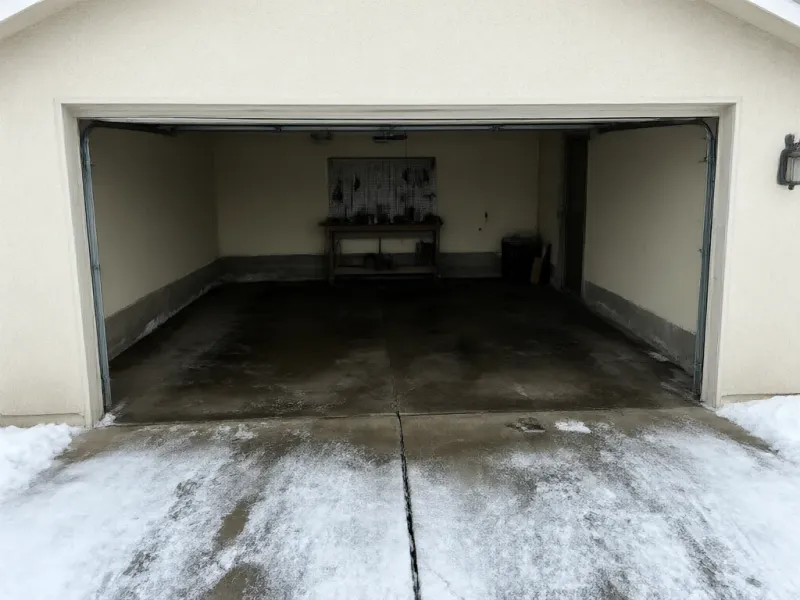
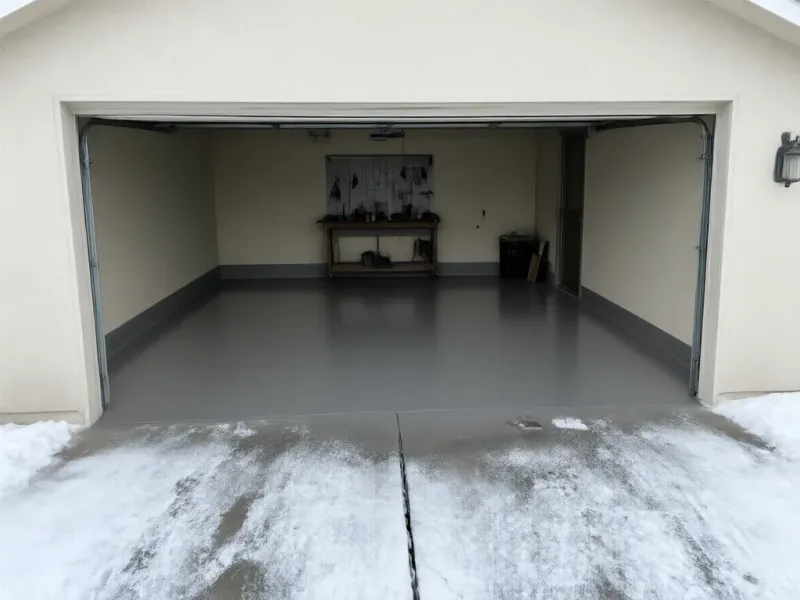
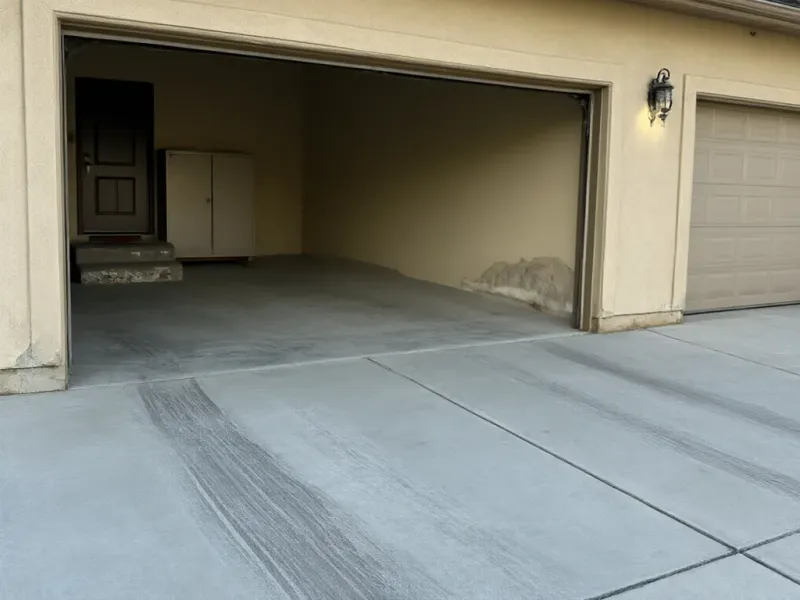
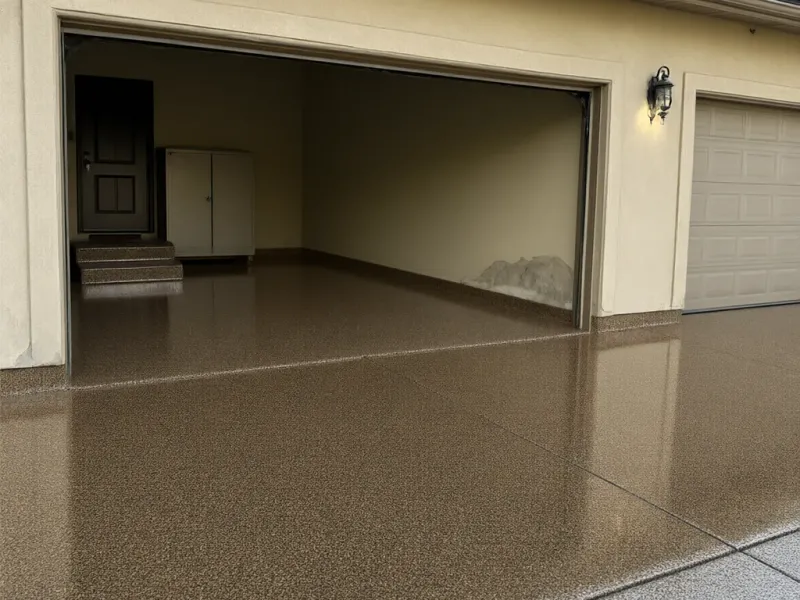
What a Salt Lake Valley Garage Throws at an Epoxy Floor
Salt Lake City averages 60 inches of snow a season and 127 days a year at or below freezing. Every storm sends brine into the garage on your wheel wells. On bare concrete it soaks in, refreezes and pits the apron by the door first.
Summer is the other half. The city averages 56 days a year at 90°F or hotter, and tires come off the freeway hot enough to soften a thin coating. That's hot-tire pickup, and it's the number one reason kits fail here.
Then there's the sun. At 4,327 feet, an open garage door lets strong UV onto the front few feet of the floor every afternoon. Aromatic epoxy ambers under that light, which is why every garage system we install finishes with an aliphatic polyaspartic topcoat that holds its color.
Garage Floor Epoxy vs a Box-Store Kit
A box-store kit isn't useless. It's a decent coat of paint for a storage room nobody drives into. In a garage, three things work against it.
No profile under it
Kits tell you to etch with acid. Acid leaves a troweled garage slab close to as smooth as it started, so the coating sits on the surface instead of gripping it. We grind to CSP 2-3, which feels like coarse sandpaper and gives the epoxy something to hold.
Not enough film
Much of a water-based kit is water, and it evaporates. What's left is roughly 2 to 3 mils. Our flake system is about 25 mils, around ten times thicker, and 100% solids epoxy keeps all of what we roll.
No UV-stable top
Most kits stop at the epoxy coat. With nothing aliphatic over it, the apron yellows and the brine works on the film all winter. Our polyaspartic top handles both.
Signs Your Garage Floor Is Ready for Epoxy
Bare concrete that dusts when you sweep it, oil stains that won't come out, salt pitting by the door and spalls where a jack stand sat are all good reasons to coat. A kit that's peeling in tire-shaped patches is the most common reason we get called.
A floor that just looks dull is a different story. If you have a coated floor that's three years old and a little flat, try a pH-neutral cleaner before you call anyone. If it shines back up, you don't need us.
A heaving slab or cracks that keep widening also need a different first call. A coating can't hold a moving slab together, so get the concrete fixed and then we'll coat it.
Our Garage Floor Epoxy Installation Process
Clear and protect
You clear the garage the night before. We tape the walls, cover the door weatherstripping and check the slab temperature with an infrared thermometer.
Grind to CSP 2-3
Walk-behind planetary grinders do the field and hand grinders do the edges, all on HEPA extraction. Then we vacuum the slab twice.
Repair the slab
Cracks get chased and filled with rigid epoxy or polyurea, spalls get epoxy mortar, and control joints get filled or left open, your choice.
Base coat and flake
We roll the base coat in sections and broadcast 1/4-inch flake to rejection, then scrape off loose chips and vacuum again.
Topcoat and handoff
A clear polyaspartic topcoat goes on, and we give you the exact hour to walk and to park, plus the written warranty.
Garage Floor Epoxy Questions
How long before I can park on my new garage floor?
On a one-day polyaspartic floor, 24 hours, or 48 if the slab is under 50°F. On an epoxy-base flake floor, 72 hours. Hold off on parking right after a long hot drive until day 7, when the coating reaches full chemical cure.
Will hot tires lift the coating?
Not on a floor we've ground to CSP 2-3 and built to about 25 mils. Hot-tire pickup is named in our 15-year warranty, so if it happens, we fix it.
Do you coat the stem walls and the step into the house?
Yes. Stem walls up to 12 inches tall are included at no charge. Steps get the same system with grit on the treads so wet shoes don't slip.
Is a flake garage floor slippery when it's wet with snowmelt?
Full-broadcast flake has texture under the topcoat, so it grips better than a smooth solid-color floor. If you want more, we add aluminum oxide grit to the topcoat at install.
What should I clean an epoxy garage floor with?
A squeegee for brine, a soft deck brush or microfiber mop, and a pH-neutral cleaner. Skip harsh degreasers and acids, and wipe up battery acid or brake fluid when it happens.
Get a Garage Floor Epoxy Estimate
Call (385) 622-8922 or send the form. We'll measure, check the slab and email an itemized quote the same day, and most garages are booked 7 to 14 days out.